Successful Ideation Workshops: Strategies for Founders in Rural Renewable Energy
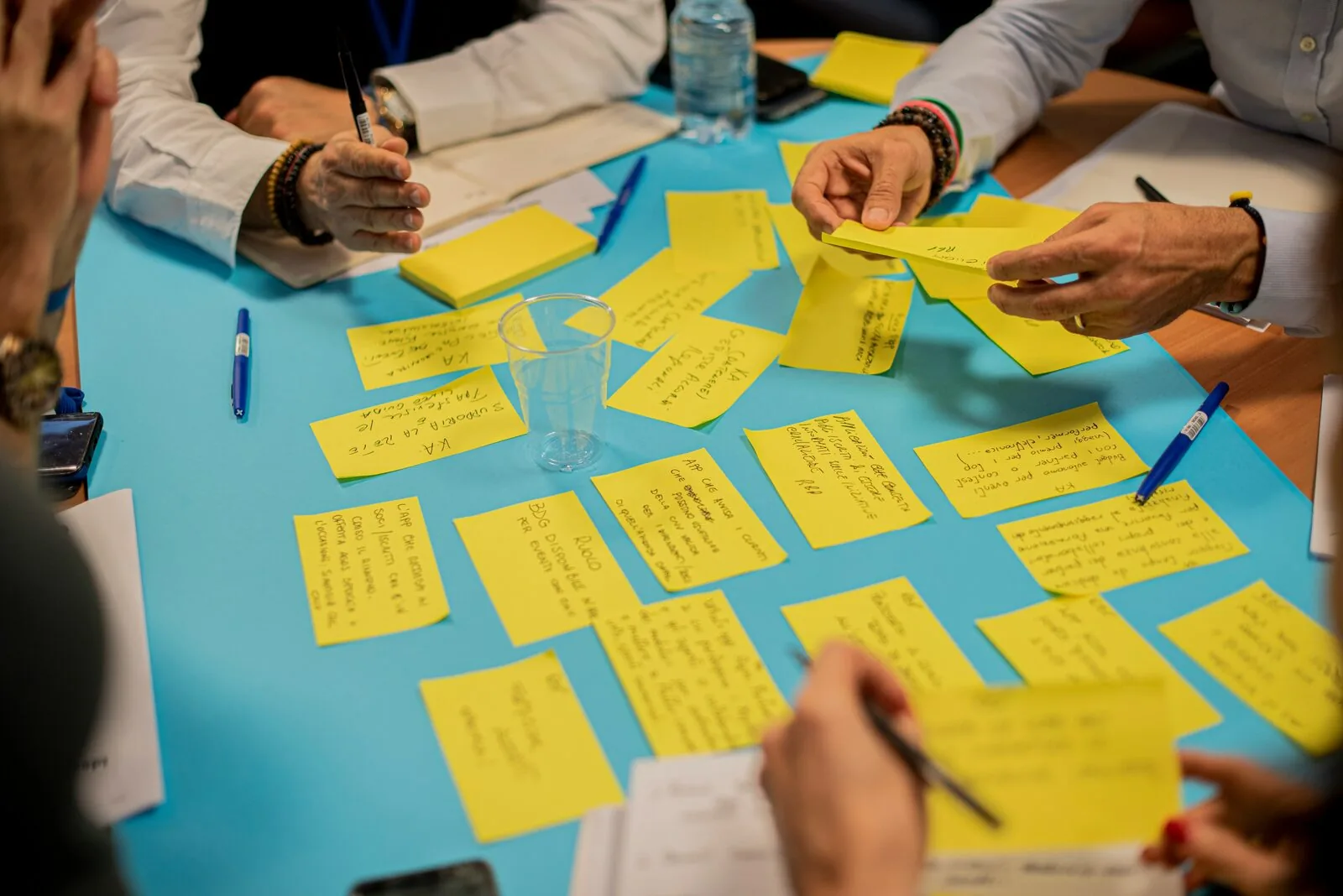
Climate change and the energy transition present humanity with enormous challenges, but also unprecedented opportunities for innovation. Particularly in rural areas, which are rich in natural resources and often more directly affected by climate change, there is enormous potential for start-ups in the field of renewable energies. Founders Bay is convinced that the initial spark for groundbreaking solutions often arises in creative idea workshops.
The Importance of Idea Workshops for Impact Startups
In the context of Climate & Social Impact, sound idea development is crucial. It's not just about finding a technical solution, but one that is both ecologically sustainable, socially acceptable, and economically viable. Idea workshops offer a protected space for experimentation, critical reflection, and collaborative work:
- Define complex problems: The challenges in the energy transition are multifaceted. A workshop helps to precisely analyze the problem statement and understand the core needs of the target group.
- Foster creativity: Targeted methods help overcome mental blocks and open up new perspectives.
- Enhance interdisciplinary collaboration: Founder teams can bundle their knowledge to develop holistic solutions.
- Rapidly validate prototypes: Initial ideas can be visualized and feedback can be gathered early on.
Founders Bay firmly integrates such workshops into the accelerator phase to optimally prepare startups for developing future-oriented energy concepts.
Preparation: The Foundations of a Successful Workshop
A successful idea workshop begins long before the first brainstorming session. Careful preparation is crucial.
1. Clear Goal Definition and Problem Statement
What exactly should be achieved at the end of the workshop? "How can we accelerate the energy transition in rural areas through innovative models of citizen participation?" is more precise than "How do we build more renewable energies?" Founders Bay coaches founders in sharpening this question.
2. Assembling the Right Team
Diversity is key. A successful workshop team benefits from different backgrounds: technical experts, business economists, designers, but also representatives of the target group such as farmers or municipal representatives. Rural areas often offer a wealth of local knowledge that should definitely be integrated.
3. Selecting the Suitable Moderator
An experienced moderator is essential to lead the workshop, manage time, and guide the group through the different phases. Founders Bay provides experienced moderators and methodology experts for its cohorts.
4. Inspiring Environment
The workshop location should be inspiring and free from distractions. In rural areas, unconventional locations such as an old farmhouse or a barn can also create a special atmosphere.
Proven Workshop Strategies and Creativity Techniques
1. Design Thinking: Human-Centered Innovation
Design Thinking is an iterative method that strongly focuses on user needs. The phases are: Empathize (understanding users), Define (defining the core problem), Ideate (idea generation), Prototype (creating test models), and Test (feedback and iteration).
For renewable energy startups, this means, for example: conducting interviews with farmers about their difficulties in energy generation, formulating a concrete core problem, then brainstorming solutions such as shareable wind turbines or agri-photovoltaics.
2. Brainstorming and Brainwriting
Classic brainstorming techniques are still effective when applied correctly:
- No criticism: Every idea is welcome, no matter how "crazy" it seems.
- Quantity over quality: The goal is to generate as many ideas as possible in a short time.
- Build on others' ideas: "Yes, and…" instead of "No, but…" – developing existing ideas often leads to the best solutions.
Brainwriting (e.g., the 6-3-5 method) involves writing down ideas and passing them around in rounds – ideal for teams where some participants are more reserved.
3. SCAMPER Method: Systematic Further Thinking
The SCAMPER method is a checklist for systematic idea development:
- Substitute: What can be replaced?
- Combine: What can be combined?
- Adapt: What can be adapted to other contexts?
- Modify: What can be changed?
- Put to other uses: How can the technology be used differently?
- Eliminate: What can be simplified?
- Reverse: What can be reversed?
Example: How could wind power be "reversed"? Perhaps through smaller, vertical wind turbines integrated into local architecture.
4. Business Model Canvas and Value Proposition Canvas
After idea generation, concepts need to be structured. The Business Model Canvas describes nine key components of a business model: customer segments, value propositions, channels, customer relationships, revenue streams, key resources, key activities, key partnerships, and cost structure. The Value Proposition Canvas helps to precisely tailor the value proposition to the needs of the target group.
Follow-up: From Idea to Implementation
The follow-up is as important as the workshop itself:
- Documentation: Systematically record all results, ideas, and discussion points.
- Prioritization: Evaluate the most promising ideas based on feasibility, impact potential, and innovation level.
- Action plan: Define clear next steps, responsibilities, and deadlines.
- Follow-up meetings: Regular meetings to check progress and make adjustments.
- Resource allocation: Ensure that the necessary resources – financial, human, and technological – are available.
Conclusion: Rural Areas as Innovation Drivers for Renewable Energies
Idea workshops are a powerful tool to unleash innovation in the field of renewable energies. Rural areas, with their proximity to nature, local resources, and committed communities, offer ideal conditions for effective solutions. Founders Bay accompanies founders on this journey – from the first idea to the scalable impact startup.