ESOP vs. VSOP: Pros and Cons for Founders in the Energy Sector

'''
Introduction
As a founder in the dynamic energy sector, you face a critical choice: Employee Stock Ownership Plans (ESOPs) or Virtual Stock Option Plans (VSOPs). These two models offer different approaches to employee participation, each with its own opportunities and challenges.
You might be familiar with this:
- While ESOPs grant real company shares and thus foster a direct connection with employees,
- VSOPs offer a more flexible solution that often involves less administrative overhead.
But which model is a better fit for your startup?
Imagine if you could boost your employees' motivation while securing the long-term success of your company. The answer to this question could be crucial for your vision and the future of your team.
Differences Between ESOP and VSOP
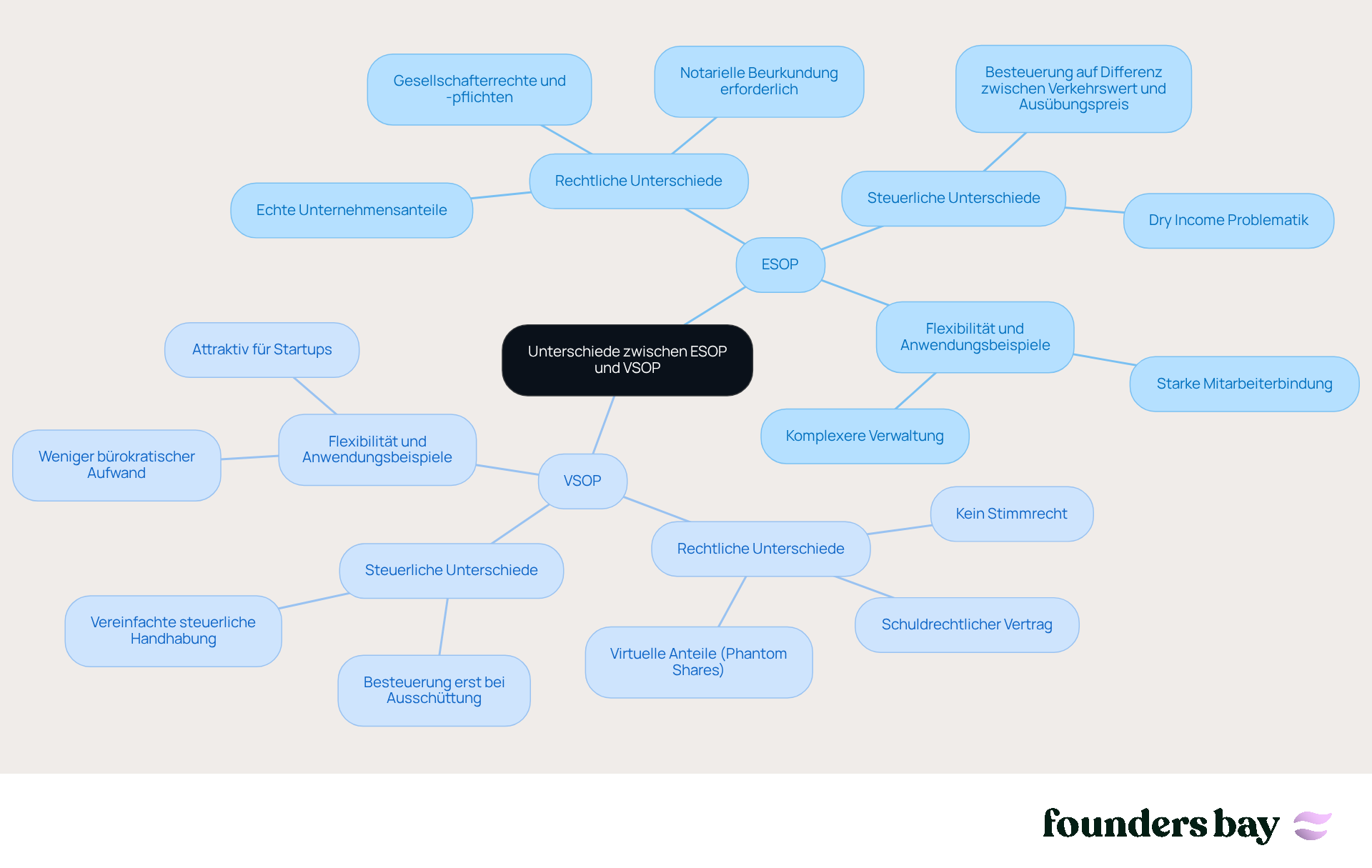
The core difference between an Employee Stock Ownership Plan (ESOP) and a Virtual Stock Option Plan (VSOP) lies in the type of shares offered to you as an employee. While ESOPs grant you actual company shares, allowing for direct participation in the business, VSOPs merely provide a claim to future payouts linked to the company's value, without you actually acquiring shares. These differences have significant effects on the legal and tax frameworks, as well as on your motivation and commitment to the company.
Legal and Tax Differences:
- ESOP: You acquire real company shares, which requires notarial certification and makes you a shareholder. This comes with additional rights and obligations. Taxation occurs on the difference between the market value and the exercise price, which is considered a non-cash benefit and referred to as 'dry income.'
- VSOP: You don't receive real shares but virtual ones tied to the company's value. Taxation only occurs upon an actual payout, which simplifies tax handling. Furthermore, the exit conditions for VSOPs are simpler, as they are based on a contractual obligation.
Flexibility and Use Cases:
- ESOP: Suitable for fostering strong employee loyalty but is often more complex to administer.
- VSOP: Offers a more flexible and less bureaucratic solution that can be more attractive for many startups. Companies like the Airbus Group offer their employees shares on preferential terms, while startups often use equity participation programs to minimize administrative effort and avoid tax issues. One example is the e-commerce logistics startup Hive, which offered its employees a choice between a higher salary or company shares.
In summary, the choice between an ESOP and a VSOP heavily depends on your company's goals for employee participation. While ESOPs can foster strong employee loyalty, VSOPs are often the more practical solution for startups due to their flexibility and lower administrative requirements, especially in an environment where competitive conditions in Germany are often perceived as unfavorable.
Pros and Cons of ESOPs and VSOPs
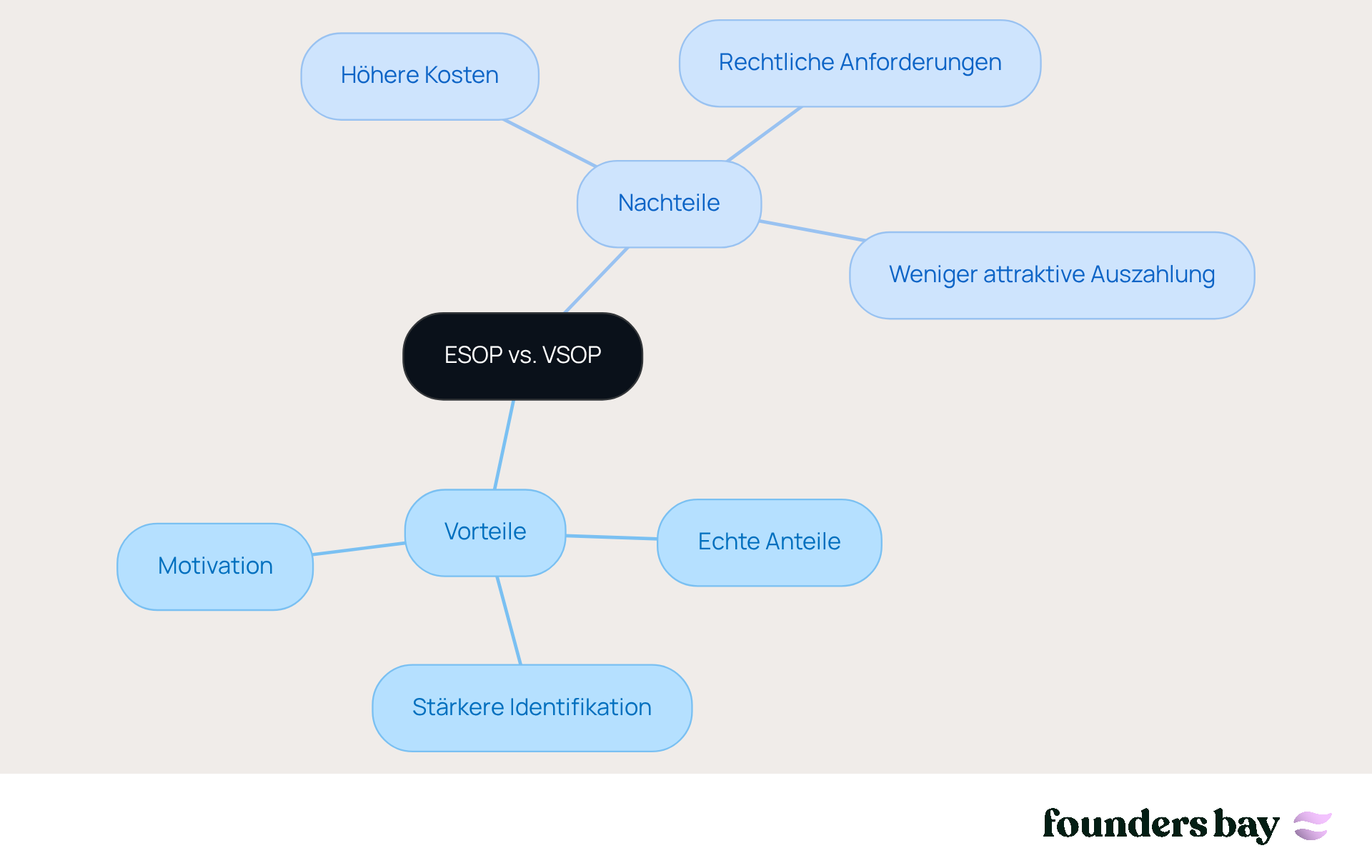
You know the feeling of being part of a company but not really feeling like you have a say? Employee stock ownership plans give you the chance to acquire real shares in the company. This not only leads to a stronger identification with the business but also boosts your motivation. Imagine you're not just an employee, but a part-owner—that changes everything!
But there are challenges, too. These programs often come with higher administrative costs and legal requirements. You might be thinking, "That sounds complicated!" But don't worry, there are simpler options. These require less red tape and are easier to implement. However, they don't offer true ownership, which can affect your commitment to the company.
Another point you should consider is that with both ESOPs and VSOPs, the payout often only occurs when the company has an exit event. This might be less attractive to you.
Here's how to move forward: Research the different models and find out which one best suits you and your company. You have the opportunity to actively shape your professional future!
Recommendation of ESOPs for Startups
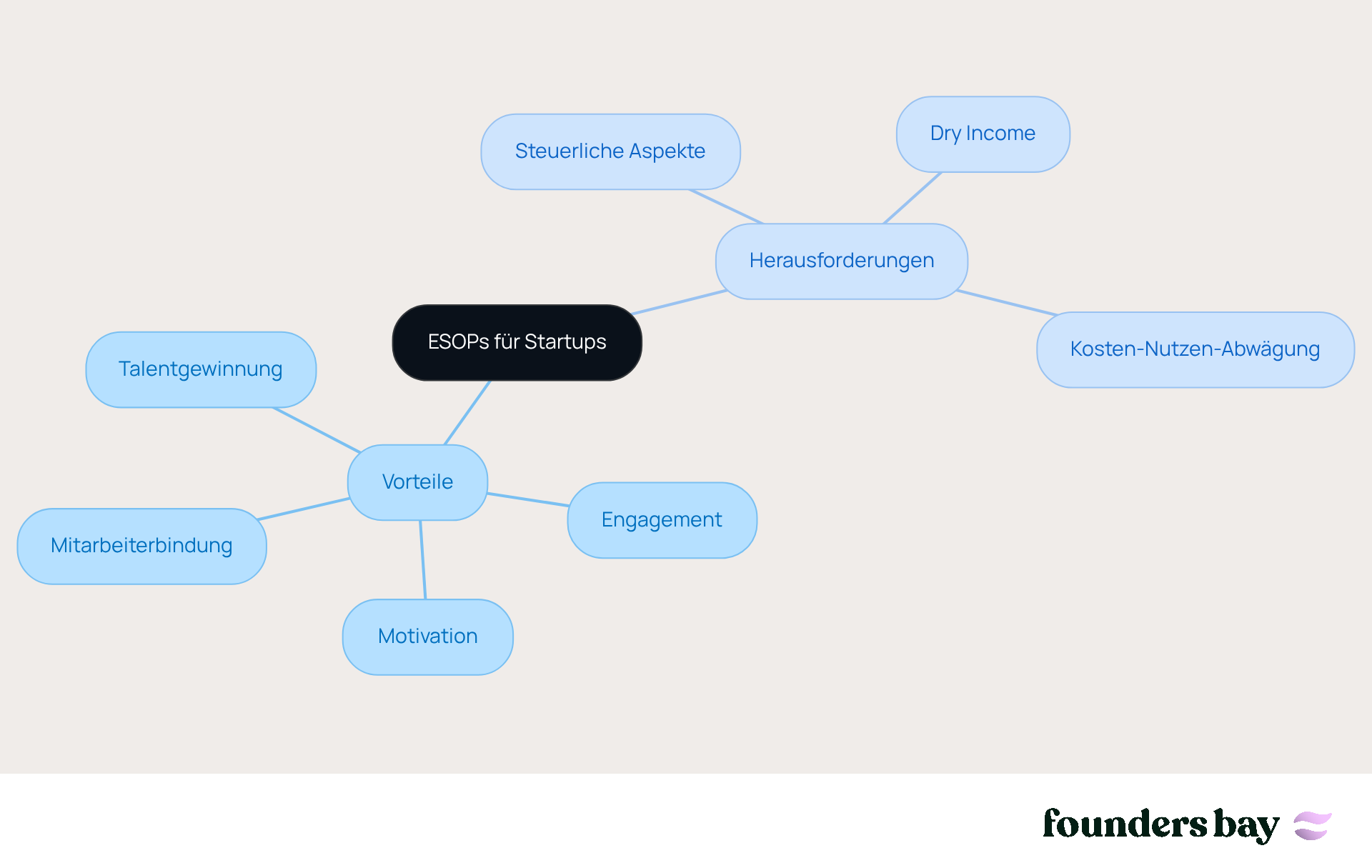
For startups in the energy sector, implementing an Employee Stock Ownership Plan (ESOP) can be particularly advantageous. You know how it is: in the early stages, you often struggle with limited financial resources. An ESOP not only strengthens employee loyalty but also promotes engagement and motivation. Imagine being able to attract and retain talent without having to pay high salaries right away. The prospect of future equity in the company through models like an ESOP can encourage your employees to commit more deeply to the company's success.
Studies show that companies with ESOPs and employee participation programs have higher productivity and lower employee turnover. That sounds promising, doesn't it? However, it's important to consider the tax aspects. Employees have to pay taxes on the non-cash benefit without receiving any actual cash—this is called 'dry income.'
But don't let that discourage you! The challenges of implementing an employee participation program, such as weighing the costs and benefits, are not to be underestimated, but they are not insurmountable. Dr. Müller recommends implementing employee participation programs early in a company's development. This way, you can leverage the benefits of employee equity from the start and build a successful future together with your team.
Commonalities Between ESOP and VSOP
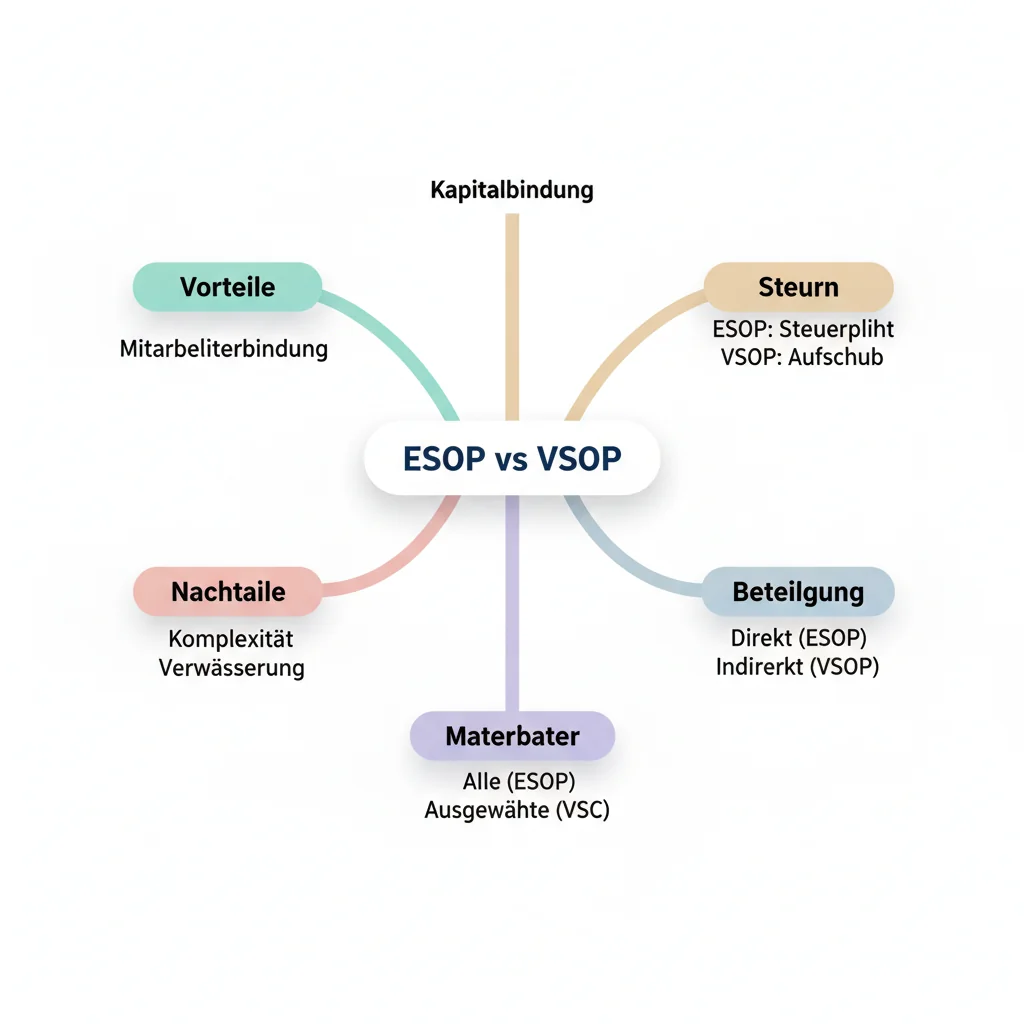
You know the feeling when your company lacks employee loyalty and motivation. Both ESOPs (Employee Stock Option Plans) and VSOPs (Virtual Stock Option Plans) offer you a way to change that. These models are not just incentive systems; they are a key to boosting your employees' performance and fostering their commitment to the company's goals. Imagine your employees feeling not just like part of the company, but as co-creators of their future.
If you leverage the advantages of these plans correctly, you can not only increase employee satisfaction but also secure tax benefits for your company. With ESOPs, the non-cash benefit is taxed at the time the option is exercised, which can sometimes be a financial burden. In contrast, with virtual stock options, taxation occurs only upon an actual payout, which reduces the tax burden for your employees.
Nikolas Samios puts it perfectly: 'Good employee participation is not just a legal or financial construct, but an expression of a strong corporate culture.' Clear communication of the terms and benefits is crucial so that your employees understand and appreciate the opportunities.
Look at companies like the e-commerce logistics startup Hive, which offered its employees a choice between a higher salary or company shares. This led to a significant increase in employee satisfaction.
Also, note the specific thresholds for ESOPs mentioned by Marisol Hayler: 'The condition is that the following thresholds are not currently exceeded and have not been exceeded in any of the past six years: annual revenue of a maximum of 100 million euros.'
So, these programs are not just legal or financial constructs but also an expression of a strong corporate culture that attracts and retains talent. This is how you can create an inspiring and motivating work environment where your employees can thrive.
Conclusion
The choice between an Employee Stock Ownership Plan (ESOP) and a Virtual Stock Option Plan (VSOP) is crucial for you as a founder in the energy sector. You know the situation: Both models offer different approaches to employee participation, each with its pros and cons. While ESOPs grant real company shares, fostering a deeper connection between employees and the company, VSOPs offer a more flexible and less bureaucratic solution that is more attractive to many startups.
Imagine having the opportunity not just to motivate your team, but to actively involve them in your company's future. The debate over the pros and cons of ESOPs vs. VSOPs highlights key aspects like legal frameworks, tax implications, and the impact on employee loyalty. ESOPs require notarial certification and come with additional rights and obligations, while VSOPs are simpler to implement and are only taxed on actual payouts. These differences can be decisive, depending on the specific goals and structure of your company.
Here's your path forward: It's important that you carefully weigh the options of ESOPs and VSOPs and choose the right solution for your company. Implementing an employee participation program can not only boost your employees' motivation and loyalty but also contribute to creating a positive corporate culture. It's worth examining the different models in detail to successfully shape your company's future together with a dedicated team.
Frequently Asked questions
What is the core difference between an ESOP and a VSOP?
The core difference lies in the type of shares. ESOPs grant real company shares and allow for direct participation in the business, while VSOPs only provide a claim to future payouts linked to the company's value, without any real shares being acquired.
How do the legal and tax frameworks for ESOPs and VSOPs differ?
With an ESOP, you acquire real company shares, which requires notarial certification and makes you a shareholder. Taxation is based on the difference between the market value and the exercise price. With a VSOP, you receive virtual shares that are only taxed upon an actual payout, which simplifies tax handling.
What are the pros and cons of administering an ESOP vs. a VSOP?
An ESOP is good for fostering strong employee loyalty but is often more complex to administer. A VSOP offers a more flexible and less bureaucratic solution that can be more attractive for many startups.
In what situations are ESOPs and VSOPs particularly beneficial?
ESOPs are beneficial for companies looking to foster strong employee loyalty, while VSOPs are a more practical solution for startups that want to minimize bureaucratic hurdles and avoid tax complications.
What are some examples of companies using ESOPs or VSOPs?
Companies like the Airbus Group offer their employees shares on preferential terms. Startups like the e-commerce logistics startup Hive give employees the choice between a higher salary or company shares to minimize administrative overhead.
How does the choice between an ESOP and a VSOP affect employee loyalty?
The choice heavily depends on the company's goals for employee participation. While ESOPs can promote strong employee loyalty, VSOPs are often the more practical solution for startups due to their flexibility and lower administrative requirements.
'''